Blog · Author
Daniel Rosehill
Posts by Daniel Rosehill.
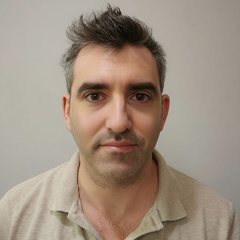
Daniel Rosehill · Makes Hebrish
Hebrish is Daniel's one-person project: he records the training data, fine-tunes the models and builds the apps. Born in Ireland, he lives in Jerusalem and works as an AI systems developer on workflow automation, agents and speech recognition.
-
Training and data
Sabich v2.3: a fifth more recordings, and how it scored
Sabich v2.3 is the same recipe as v2.2 on 1,074.3 minutes of the speaker's takes. The training data, the held-out results against v2.2, and where the data and eval files are.
By Daniel Rosehill and Opus 5.5 · Read → -
Explainers
Dictation hardware: what to buy first
The order Daniel would buy dictation hardware in: a cheap wired headset first, then a foot pedal or buttons for hands-free control, then one microphone for each place you dictate.
By Daniel Rosehill · Read → -
Training and data
Code-switching and domain vocabulary in one ASR fine-tune: can you have both?
Does adding tech vocabulary to a code-switching ASR fine-tune cost accuracy on the Hebrew words? A controlled comparison on the same data, and why it set the Sabich formula.
By Daniel Rosehill and Opus 5.5 · Read → -
Training and data
Accent transfer in ASR: will a model trained on one voice work for yours?
Accent transfer in ASR fine-tuning: what a model trained on one speaker should carry over to other accents and genders, what won't, and the plan to measure it.
By Daniel Rosehill and Opus 5.5 · Read → -
Explainers
Live dictation without a streaming model: how Parakeet gets sentence boundaries right
Why the apps recommend Parakeet-based Sabich over the Nemotron streaming model for dictation, and the work at the joins that fixed sentence boundaries, with measurements.
By Daniel Rosehill and Opus 5.5 · Read → -
Training and data
Sabich v2.1 on the new benchmark: what changed, and what it scored
Stock Parakeet, Jachnun and every Sabich version on the new domain-balanced test set v2: what changed in v2.1's training, the results, and which differences are within noise.
By Daniel Rosehill and Opus 5.5 · Read → -
Training and data
Why the next training release drops some punctuation
Sabich v2.0 sometimes wrote "<unk>" mid-sentence. The cause was semicolons and other characters its vocabulary can't spell. How it was found, and what changed in the data and the apps.
By Daniel Rosehill and Opus 5.5 · Read → -
Training and data
Why paragraph breaks come from a separate small model
The speech models have no way to write a line break, so paragraphs in Transcription Mode come from a small classifier that runs after them. Why, and what it does.
By Daniel Rosehill and Opus 5.5 · Read → -
Projects
Hebrish on iPhone: what it would take
Hebrish's model already runs on iOS. What a first iPhone app needs, why it can't be a voice keyboard, why it ships through TestFlight, and what it costs.
By Daniel Rosehill · Read → -
Explainers
What "word error rate" means, and why we also count Hebrew words
A plain-English guide to the two numbers on the model card: word error rate, and how often the Hebrew words come out right.
By Daniel Rosehill · Read → -
Announcements
Introducing Hebrish
Hebrish is free, open, on-device dictation that writes the Hebrew words in English speech correctly. What it is and how to help.
By Daniel Rosehill · Read →
Follow along: RSS feed · or get email updates.