Meorav: speech synthesis for English-Hebrew code-switching
The first Hebrish text-to-speech release for real use: 5.5 hours of one voice, reading English with Hebrew words in it, the way English speakers in Israel actually say them. Yes, it sounds Irish.
Hebrish now has a voice. Meorav is our first text-to-speech model built for code-switching between English and Hebrew: give it a sentence of English with Hebrew words in it, written in Latin letters, and it reads the whole thing aloud, Hebrew words included, in one voice. Version 2.2, released on 2026-11-09, is the first one we're sharing as something to use rather than a proof of concept.
And yes, it has an Irish accent.
About the accent
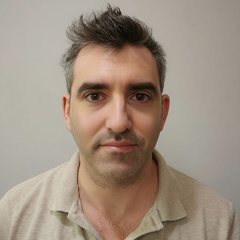
Meorav is trained on one voice: Daniel's. Daniel is Irish and lives in Jerusalem, so the model reads English like an Irishman and Hebrew like someone who has spent a lot of time in a lot of offices waiting for a lot of forms. That's what it learned, and that's what it gives back.
We did not try to remove the accent, and this release makes no claim about it. Nor is it a claim of native Hebrew: Daniel isn't a native speaker, and Meorav doesn't speak Hebrew like one either. A later version may try for a more neutral English. What it does demonstrate is the code-switching case: English with Hebrew words dropped in, the way English speakers living in Israel actually talk. Most English text-to-speech voices turn Misrad Hapnim, teudat zehut or acharei hachagim into something a tourist would say from a phrasebook: wrong stress, a ch that comes out as a k, Hebrew read as if it were English spelling. Meorav says them the way an English speaker who lives here says them in the middle of a sentence: as Hebrew words, not as English spelling, without a pause or a change of voice. It doesn't always get them right; listen and judge for yourself.
Listen
The same sentence twice. Before is the base model, untuned, copying Daniel's voice from a single recording. After is Meorav. Listen to the Hebrew words.
I spent the whole morning at Misrad Hapnim, and I still don't have the teudat zehut.
Everyone here says everything will happen acharei hachagim. I used to find it frustrating, but honestly, after a few years you start saying it yourself.
There are ten sentences in all, from a single line up to a 35-second passage, on the model page and on Hugging Face. None was picked or edited.
A little flat
Listen to a few and you'll hear that Meorav reads rather evenly, like someone reading a sentence off a card. That's more or less what it was trained on: almost every take is a read prompt, and every take goes through the same compression and loudness levelling. The cheapest thing to try is sampling: the model samples its speech at a "temperature" of 0.9 by default, and a higher one lets it pick less likely, livelier phrasing. The samples on the model page include every sentence at 1.1 and 1.3, so you can hear the difference for yourself. Longer-term, the fix is more expressive training audio, which is being recorded now.
What it was trained on
- 3,995 takes, about 5.5 hours, all Daniel. 1,103 were recorded specifically for the voice model; the other 2,924 come from the recordings made for Hebrish's speech recognition models, screened down to everyday code-switching sentences (no tech vocabulary, no digits, no noisy rooms, nothing over 15 seconds).
- Every take is cleaned with NVIDIA NemotronLabs RE-USE, then a podcast-style voice chain (EQ, de-essing, compression, loudness).
- The base is Qwen3-TTS-12Hz-1.7B-Base, fully fine-tuned (every weight updated) for 3 epochs. Qwen3-TTS reads raw text with no phonemiser in between, which is what lets it learn romanized Hebrew from recordings.
Two earlier attempts at this voice, an Orpheus fine-tune and a zero-shot clone, both came out sounding American. The full recipe and every model used are under How it's made; the version-by-version changes are in the v2.2 release notes.
Getting it
The weights are on Hugging Face at Hebrish/Meorav, by request, under CC BY-NC 4.0, with GGUF builds for running on a device. There is also a beta Android app that runs it on the phone; the model page has the link, example code and hardware notes.
There's no benchmark for Meorav yet; it was released after Daniel listened to it. The samples are there so you can judge it for yourself, accent and all.