Meorav-Multi-Voice: one text-to-speech model, five designed voices
American male and female, British male and female, Australian male: none of them a real person.
PoC Meorav-Multi-Voice v1.0 is a proof of concept. It was not trained on enough data, so the Hebrew code-switching did not transfer to the five voices as well as hoped. The training pipeline, and what went wrong, is written up in How Meorav-Multi-Voice was trained.
Meorav-Multi-Voice v1.0 was published on 2026-11-16. It is a text-to-speech model in the Meorav line: it reads English with Hebrew words in it ("Hebrish") aloud, with the Hebrew words said the way English speakers in Israel say them. What is new is that one model now speaks in five different voices.
The five voices
 Josh, American male (the same designed voice as Meorav v3.0)
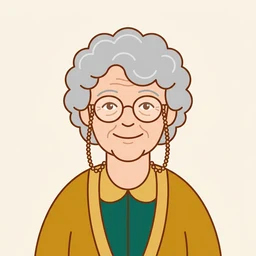 Rivka, American female
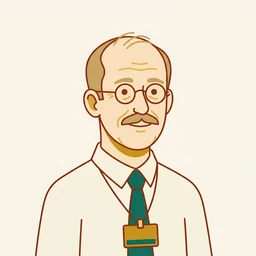 Nigel, British male
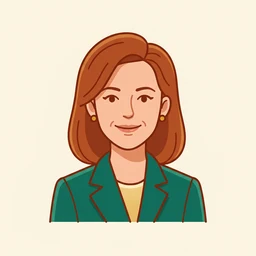 Fiona, British female
 Bazza, Australian male
None of them is a real person, and the avatars are illustrations, not likenesses. The names (given on 2026-11-16) come from the audio drama below; Josh was new. Each was designed from a text description with OmniVoice, then fixed to one seed. You pick a voice by passing a short reference clip, and the five clips are in the repository's voices/ folder.
Listen: The Teudat Zehut
The Teudat Zehut: a comedy in four queues, 8 min 31 s, first render. Daniel narrates in his own voice (Meorav-Daniel); the other voices are Meorav-Multi-Voice.
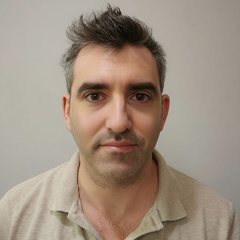 Daniel, a new oleh, narrates in his own voice (Meorav-Daniel).
- Bubbe Rivka, the American grandmother (Rivka, American female).
- Nigel, the Misrad HaPnim clerk from Manchester (Nigel, British male).
- Fiona at the bank (Fiona, British female).
- Bazza from Perth (Bazza, Australian male).
- Josh (American male) is the phone menus and the ticket machine.
A few samples
The same line in each of the five voices:
| Voice | Audio |
|---|---|
| Josh, American male | |
| Rivka, American female | |
| Nigel, British male | |
| Fiona, British female | |
| Bazza, Australian male |
Line: The teudat zehut renewal at Misrad HaPnim took almost two hours. More samples are on the model page; all demo audio is in the Hebrish/Demos dataset.
How it was made
It is a full fine-tune of Qwen3-TTS-12Hz-1.7B-Base, continued from Meorav-Daniel. The training data has two parts. Daniel's 461 code-switching takes were trained only on their Hebrew-word spans, with the English parts masked out, so the voices learn how the Hebrew words are pronounced without taking on his voice. On top of that come 245 English lines per designed voice, generated with OmniVoice. Training ran for three epochs on one A100-80GB on Modal (run mv1). The full pipeline, step by step, is in How Meorav-Multi-Voice was trained.
Who it is for
People building their own tools who want English speech with Hebrew words in it, in a voice that is not Daniel's: narration, read-aloud, prototypes. The Hebrish apps do not offer text-to-speech, so you run it yourself with qwen-tts; the model card has a short usage example.
How to try it
The model is on Hugging Face as Hebrish/Meorav-Multi-Voice. Access is gated: accept the terms and it is approved instantly. It is CC-BY-NC-4.0 plus the Hebrish terms, so non-commercial use is free and commercial use needs a licence. Write Hebrew words in Latin letters, the way an English speaker in Israel would spell them.
Limitations
- It is a proof of concept: too little training data for the Hebrew to carry over fully into the new voices.
- It is not benchmarked. The renders were checked by ear only; Daniel listened and said they sound great, and that is the only evaluation so far.
- The gutturals (the "ch" in chag, achi) are not always produced.
- Training clips were at most 15 seconds, so generate long text sentence by sentence.
- Only these five voices were trained. Other reference clips can be tried, with no promises.
The other lines are Meorav, a single designed American voice, and Meorav-Daniel, Daniel's own voice. All three are on the text-to-speech page.