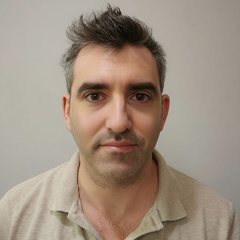
Weekend update, 2026-11-13: where Hebrish stands
My weekend video update, in writing, with chapters.
I recorded this just before Shabbat here in Jerusalem, which is how we think of the end of the week, to share where the Hebrish project stands: how I got into this, why I'm doing it and what I'm trying to achieve. Getting this vocabulary into the models has been a real labour of love over the past few weeks. The video runs just under 13 minutes, and this is the same update in writing.
In this video
- 0:00 Intro
- 0:34 How I got into dictation
- 2:29 Code-switching and the long tail
- 4:51 Why I train the models
- 6:36 How the training data is made
- 8:24 The models
- 10:35 How to help
- 11:06 Fritter and Meorav
- 12:02 Data so far, and accents
How I got here
I was born in Ireland and I've lived in Jerusalem since 2015, which is more than ten years now, though it feels like a lot less. About two years ago I started using voice dictation all the time. Before that, my experience of voice tech was that it would be fantastic if it worked, but it didn't really work, especially on Linux. I've always said that if dictation takes you more time to fix than it saves, it's a non-runner, and for a long time that was the state of the art.
Then I found Whisper, and I was amazed. Of all the ways AI is changing technology, speech recognition has been the most exciting one for me. Voice has become my keyboard. It makes everything else easier too, including working with AI agents, because there comes a point where you can't type quickly enough to give them the context you want, and context has always been the key ingredient for better results.
Code-switching and the long tail
As an English speaker living in Israel, one thing stood out quickly: code-switching. We use Hebrew words all the time, like going to the makolet, and that just didn't work well. The model searches for the nearest word it knows and grabs whatever sounds closest. Some Hebrew words, like Shabbat, kashrut and bar mitzvah, are common enough in general English that they come through. But that leaves what I call the huge long tail: not just the few words like makolet that I keep talking about, but hundreds or thousands of street names, bus stops, supermarkets, words you use every day. Almost none of those come out right.
You can use a personal dictionary, and a lot of apps have one. The problem is that when you use different tools on different platforms, you have to keep them all in sync, and there's a limit to how much you can fix with find and replace. So my approach is to fine-tune the model itself for the vocabulary I need. The other kind of vocabulary I wanted was tech: everything from LLM fine-tuning to the specific technologies and brand names I use all the time and that reliably came out wrong.
My first experiment was a Whisper fine-tune. I got very excited when it recognised makolet, but it didn't run well on my phone, so I didn't use it every day. When I found the tooling for NVIDIA Parakeet on Android, I finally started using local dictation all the time. I prefer to use the same model across all my devices so I learn its quirks, and that's why I fine-tune Parakeet.
Why I train the models
The first motivation is honestly a selfish one: I spend hours a day dictating into Claude Code, ChatGPT, WhatsApp and whatever else, and I want my own transcriptions to be more accurate.
For anyone who spotted the licensing: the models are non-commercial because I want to share them with everyone who could benefit. If you're an English-speaking immigrant to Israel and you get frustrated because your dictation doesn't pick these words up, go ahead and use them. The non-commercial part is because rent costs money, as does everything else in this very expensive part of the world. See Licensing.
To make the models really robust, they need to be trained on more than my voice: different accents from different parts of the world, different genders, all the permutations. A South African woman who has been in Israel for five years. An American yeshiva student with an Ashkenazi pronunciation. I think that's something unique about Hebrew code-switching: it's a linguistic bubble that crosses a lot of boundaries, with code-switching into Arabic, Yiddish, Hebrew and more. The aim is good recognition across all of that, including Arab Israelis, which is why I've been careful to include the most common Arab Israeli first names and surnames.
How the training data is made
A few people have emailed to ask about this. It's a hybrid. In the first route, I ask Claude, my partner in crime, something like: "The stock model doesn't handle street names in Jerusalem. Can you find the 50 most common ones and generate sentences?" Then I steer it towards realistic context. There's no point writing "I'm going to a hockey match on Ben Yehuda Street", because there's no hockey rink. Sometimes I drop in my own sentences by hand, and sometimes a single word with its context, and ask for ten sentences, often generated with DeepSeek.
The second route is anything that's appropriately licensed. If I want more Talmudic vocabulary, more Mishnaic, more biblical places in Israel, I might look at whether the Central Bureau of Statistics has a dataset of place names and town names. It's not about getting Tel Aviv, Jerusalem and Eilat right; the stock model is fine with those. It's about the second and third level of names that it gets wrong. One task, for example, is recurring street names: there are a lot of David Hamelech streets in different moshavim and kibbutzim, so I ask for those specifically.
There are also some smaller tasks, like formatting. If I say I want to buy something for 50 shekels, I want it to come out as 50 NIS in an email. Some people will say that belongs in a post-processing step and not in the speech recognition model, but I've chosen to train a few of those, including date formats, into the core model.
The models
- Sabich is the main one: everything, the full mix. I started out training each release from scratch, then tried a rolling checkpoint, where each update continues from the last, as an experiment. It held up, so I kept it.
- Jachnun is the Hebrew code-switching on its own. I'm not keeping it as up to date as the others, because every fine-tune takes time and I have a limited budget.
- Falafel is trained on voice commands, things like "computer, put that on the right screen". I want to use it for a desktop assistant.
- Shakshuka, on NVIDIA's Nemotron, is the streaming model, for live dictation.
There are a few experimental ones as well: some on Qwen ASR to see how that works out, and quantizations and format conversions for different devices, including one for low-resource hardware. My first impression of that one is that it's not there yet.
The apps are available for Ubuntu, Windows and Android, and iOS is coming soon. I'd also like to work on clients for single-board computers.
Two more lines run alongside. Fritter is for when you're dictating into Claude Code all day about Docker, DevOps, Ansible, IP addresses, LANs and host names. It's trained on that and not on code-switching, and it isn't a Hebrish model. Meorav is the text-to-speech line. I take some of my speech-recognition training clips, clean them up with NVIDIA's excellent RE-USE model to denoise them a bit, and train on those. What transfers, of course, is my own accent, and it's very much a technical work in progress. It needs more speakers. There are workarounds, like using IPA to make synthetic samples in other voices, but I don't want to do that; it's not my vision for it.
Data so far
As the week wraps up, I have about 56 to 60 hours of training data, and I'm trying to get past 100 hours. That may sound like a lot, but for code-switching and vocabulary recognition, what I'm seeing so far is that those hours really matter for getting the sound of the code-switched words right. How well the training carries over to other voices is the open question. That's why it's so useful when you try the apps and tell me what accent you have, which words fail and what works well. Whatever you can share helps me decide what to train next.
How you can help
Try the apps and send me the vocabulary that isn't working. If you can donate GPU time for training, that would be a huge help, as would any other kind of support. The project is meant to help English speakers in Israel and the wider Jewish world, including a lot of Talmudic and biblical vocabulary. That's the mission.
Get in touch
- Report a bug or ask for a feature, including words that come out wrong.
- Send me recordings in your own voice and accent.
- Contact me about anything else, including GPU time.
- Follow the Hebrish channel on YouTube for the next update.
Thanks for watching, and for reading. Until the next video.